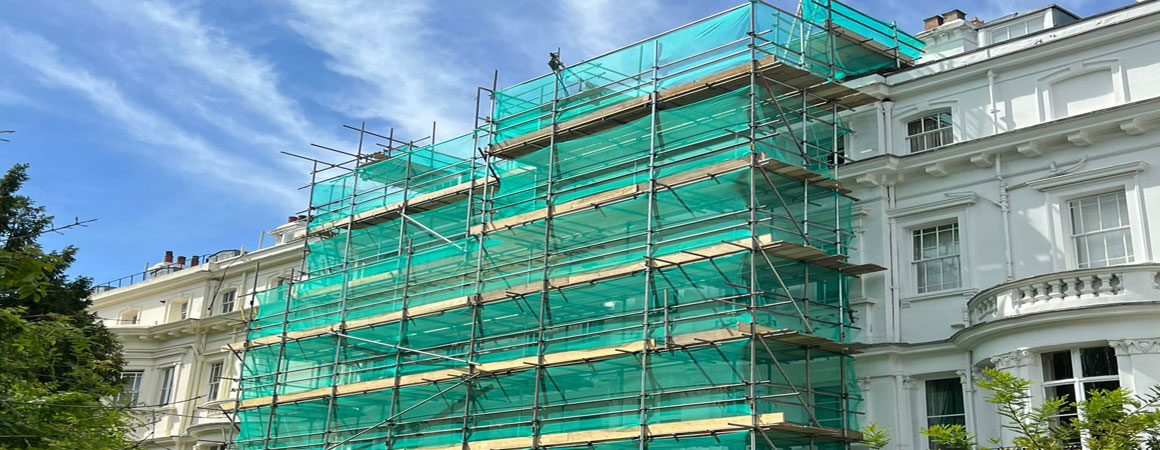
Whether you’re planning a large commercial project or a straightforward domestic job, you might want to know just how high scaffolding can actually go.
In this guide, we walk you through everything you need to know, from the regulations that apply to the factors that determine what’s actually possible on your project.
How High Can Scaffolding Go?
Something that surprises a lot of people in the UK is that there is no single legal maximum height for scaffolding. There isn’t a rule that says scaffolding must stop at a certain number of metres. But there is a strict set of regulations and safety standards that determine how high scaffolding can safely reach, effectively setting the limits in practice.
As a rough guide for the most common types of scaffolding used on UK projects:
- Standard scaffolding fixed to the side of a building can typically reach 30 to 50 metres, which is roughly the height of a 10 to 16-storey building.
- Freestanding scaffold towers, the type you might see used for smaller maintenance jobs, are limited by their width. The taller they go, the wider the base needs to be to keep them stable.
- On major projects like cathedrals, bridges or large commercial buildings, specially engineered scaffolding can exceed 100 metres, but this requires sign-off from a structural engineer.
The Rules That Govern Scaffolding in the UK
You don’t need to be an expert in construction law to understand the basics. Here are the main rules that apply to scaffolding height in the UK and what they mean in practice:
The Working at Height Regulations 2005
This is the main piece of legislation covering any work done above ground level. It applies any time there’s a risk of someone falling and injuring themselves, so it covers everything from a small domestic scaffold to a towering commercial structure. Put simply, it requires that work at height is properly planned, carried out by people who know what they’re doing and that the equipment used is safe and checked regularly. It doesn’t set a maximum height, but it does make the person in charge legally responsible for ensuring the scaffold is safe, regardless of how high it goes.
BS EN 12811-1
The technical standard that scaffolding designers and engineers follow when planning a scaffold. It’s like a rulebook for how scaffolding should be built and how much weight it should be able to hold, meaning the higher the scaffold, the more important it is to follow this standard to the letter.
The CDM Regulations 2015
This one applies to larger construction projects and requires that scaffolding be included in the overall safety plan for the site. For particularly tall or complex scaffolds, these construction and design regulations may require a structural engineer to produce a specific design for the structure.
Different Types of Scaffolding and How High They Can Go
The type of scaffold being used impacts how high it can reach in a safe and compliant way. Here’s a simple breakdown of the most common types.
- Traditional tube and fitting scaffolding – The classic type most people picture with metal tubes and clamps assembled on site. It’s the most flexible option and can be built to almost any height when it’s properly secured to the building. On a standard project, this type can reach 30 to 50 metres, and higher with specialist engineering.
- System scaffolding – This uses pre-made interlocking parts rather than individual tubes and clamps, making it quicker to put up. It has similar height limits to traditional scaffolding and is commonly used on larger or more complex projects.
- Scaffold towers – These are the smaller, self-contained structures often used for things like painting, gutter repairs or maintenance work. Because they’re not attached to a building, their height is limited by how wide the base is. As a rule of thumb, the platform height shouldn’t exceed three times the width of the base when used outside. So if the base is 1.5 metres wide, the platform shouldn’t be higher than 4.5 metres. To go higher safely, the base needs to be wider or the tower needs to be secured to a wall.
- Suspended scaffolding – Scaffold that works the other way around — instead of being built up from the ground, it hangs down from the top of a building. You’ll often see this type used on tall buildings for window cleaning or cladding work. Because it starts at the top rather than the bottom, it isn’t restricted by height in the same way, but it does require very specialist knowledge and equipment to use safely.
Factors Affecting How High Scaffolding Can Be
A few key factors determine the maximum safe height for any given scaffold.
- The ground – The taller the scaffold, the more weight is pressing down on the ground beneath it. Soft ground that is wet or uneven can make a tall scaffold unsafe, which is why scaffolders often use wide boards at the base to spread the load.
- How it’s attached to the building – For scaffolding fixed to the side of a building, the connections between the scaffold and the wall are crucial. These need to be installed at regular intervals as the scaffold goes up, and they must stay in place for as long as the scaffold is standing. Remove them and the whole structure becomes unstable.
- Wind – The higher the scaffolding goes, the more wind it has to cope with. This is especially important when scaffolding is covered with sheeting or wrapping to protect workers from the weather, as this acts like a sail and puts much greater strain on the structure.
- The experience of the scaffolding company – In the UK, professional scaffolders are trained and certified through a national scheme called CISRS. For taller or more complex scaffolds, it’s important to use a contractor whose team holds the right qualifications and, ideally, is a member of the National Access and Scaffolding Confederation, the industry’s leading trade body.
Common Questions About Scaffolding Height:
Is there a legal maximum height for scaffolding in the UK?
No, there isn’t a fixed legal limit. Instead, there is a set of regulations and safety standards that determine how scaffolding must be built and managed at any height. The taller it goes, the more stringent the requirements.
How high can a scaffold tower go without being attached to a wall?
As a general rule, the platform height should be no more than three times the width of the base when used outdoors. To go higher, either widen the base with stabilisers or secure the tower to a nearby structure.
How high is the scaffolding on a typical house?
For a standard two or three storey home, scaffolding will usually reach somewhere between 6 and 12 metres, which is well within the scope of a routine scaffold erected by any competent contractor.
So, Just How High Can It Go?
Scaffolds can go as high as a project demands, provided it is designed properly, built by those who know what they’re doing and kept in good condition throughout.
Whether you need scaffolding for a small repair job or a major construction project, the most important thing is choosing a contractor with the right experience, qualifications and track record.
Have a project in mind? Get in touch with our team at BT Scaffolding today and we’ll be happy to talk through your requirements and provide a no-obligation quote.